Internal Dosimetry Users Group (IDUG) survey results from 2007-2023


Bruno Rojas

Joint Department of Physics, Royal Marsden Hospital and Institute of Cancer Research,

Sutton Surrey, SM2 5PT, UK

(Bruno.rojasfisher@nhs.net or info@idug.org.uk)


Introduction


IDUG have surveyed UK molecular radiotherapy (MRT) activity in the UK since 2011, publishing summaries regularly [1-4]. Combined with data from a 2007 BIR survey [5] we have data from 2007 to 2023, spanning a 16-year period. To the best of our knowledge it is the only survey of its kind globally and the only long-term public record of UK MRT activity.

In our publications we give analysis and interpretation of the changes in treatment rates year on year. This online dataset is provided to keep our data publicly available and as up to date as possible for the periods between our formal publications. We aim to keep this dataset regularly updated as new data are submitted to us. Our survey is attached for anyone who wishes to respond.

In the beginning of 2026, we will distribute a survey of 2024-2025 data and we look forward to receiving you latest data which we will make available as soon as possible.

We hope that you find this useful and welcome any feedback to the email address given above.


Results


An overview of the data is given in Figure 1 with subsequent figures showing a breakdown per treatment category. The data presented below are for the following centres for 2007 and consecutive years from 2011-2023.

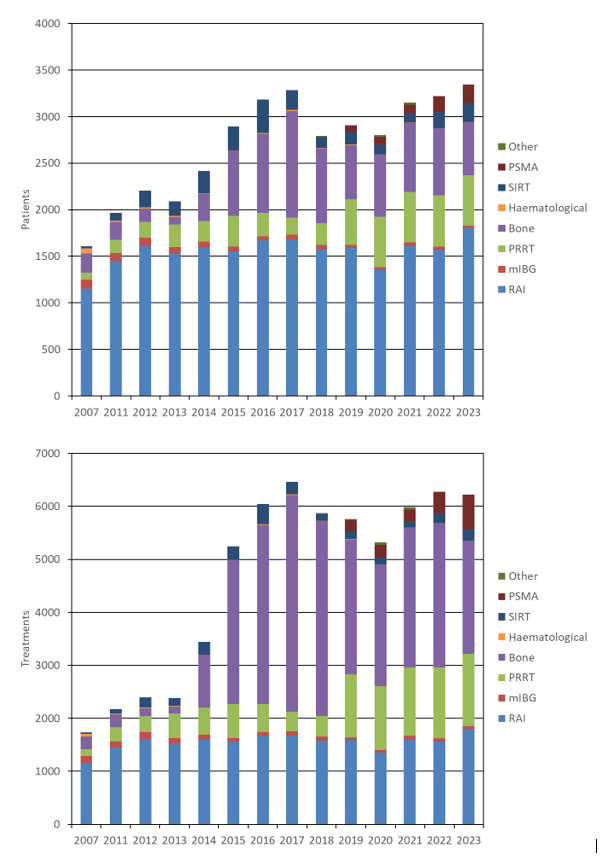
Figure 1: Numbers of MRT patients treated (upper) and treatments given (lower) for malignant conditions over the surveyed period.
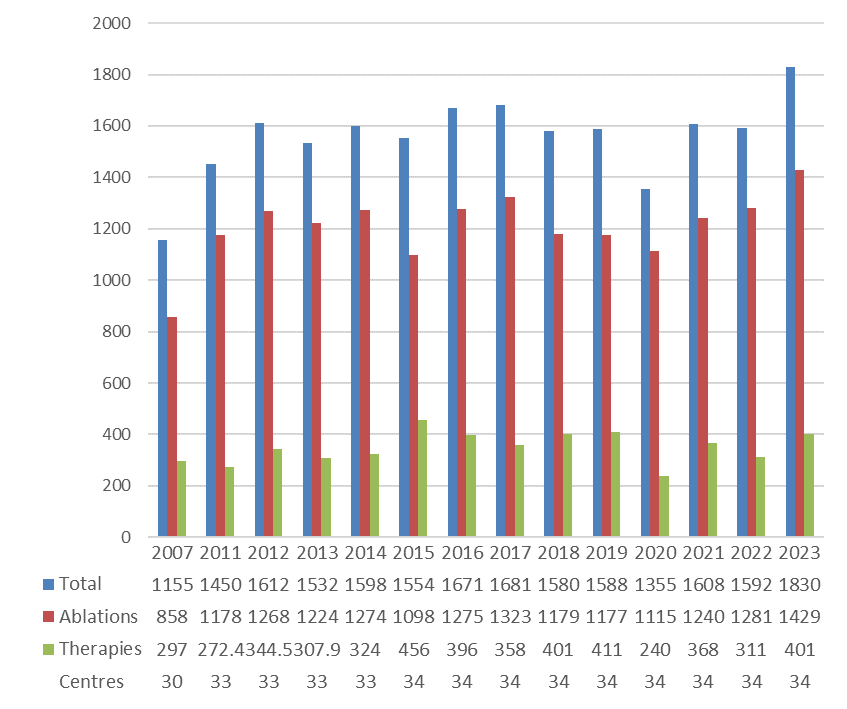
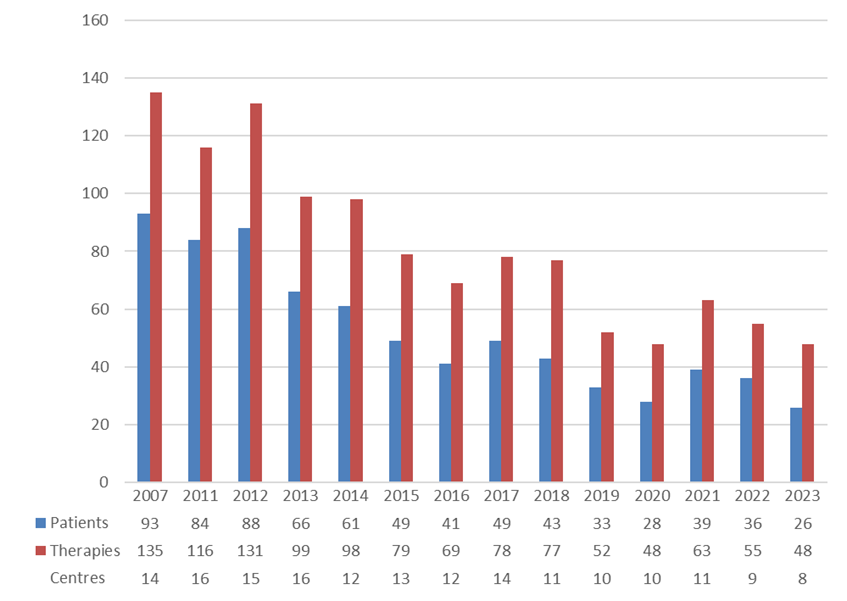
Figure 2: number of Na131I radioiodine (RAI) ‘Ablations’ (first treatment post thyroidectomy) and ‘Therapies’ (any subsequent radioiodine treatment) given.

Figure 3: number of 131I mIBG patients treated (pts) and treatments given (txs).

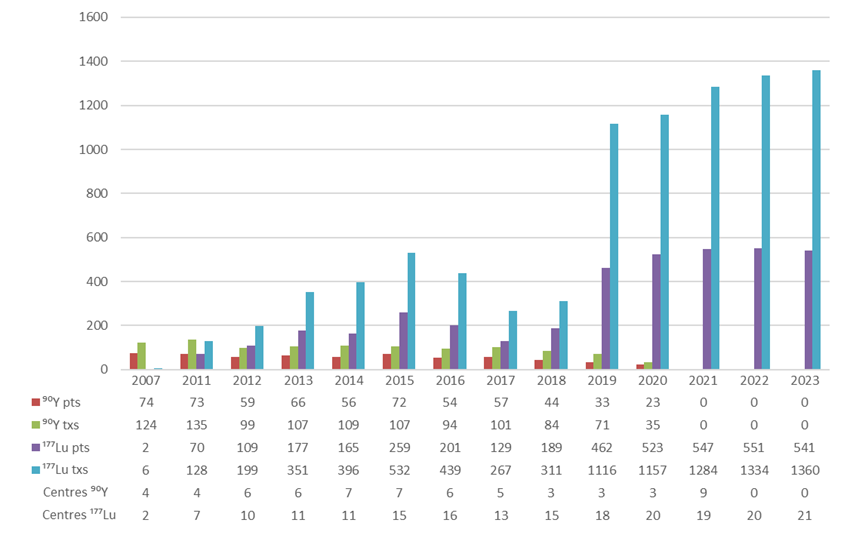
Figure 4: number of PRRT patients treated (pts) and treatments given using 90Y and 177Lu Dotatate.

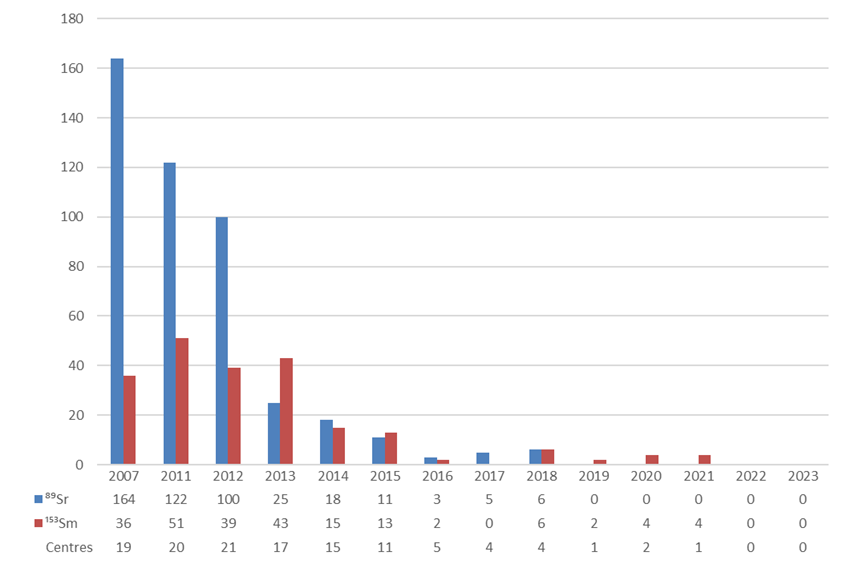
Figure 5: number of 89Sr-chloride and 153Sm-EDTMP treatments given.

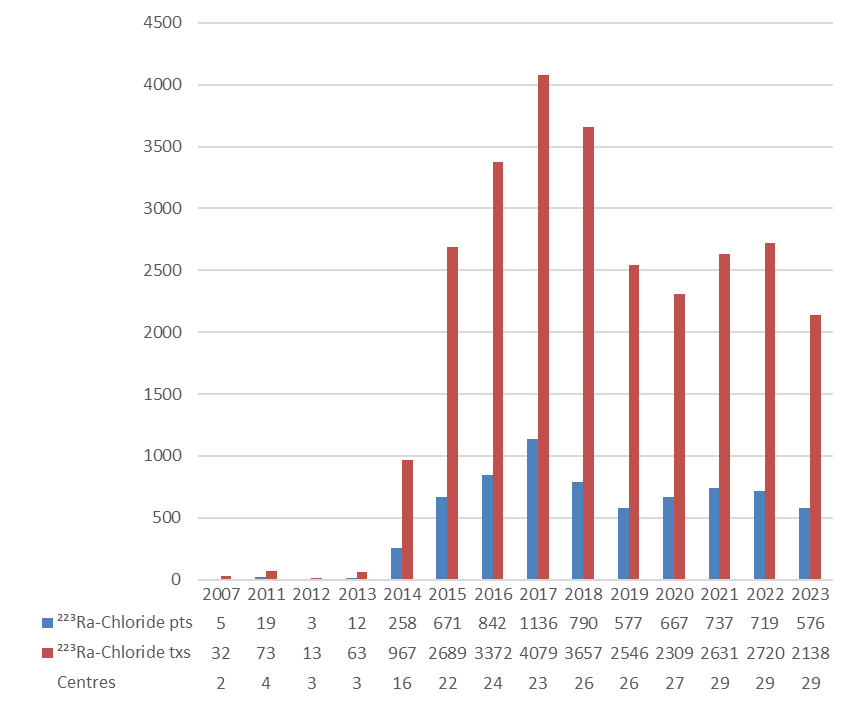
Figure 6: number of patients treated and treatments given with 223Ra-Chloride

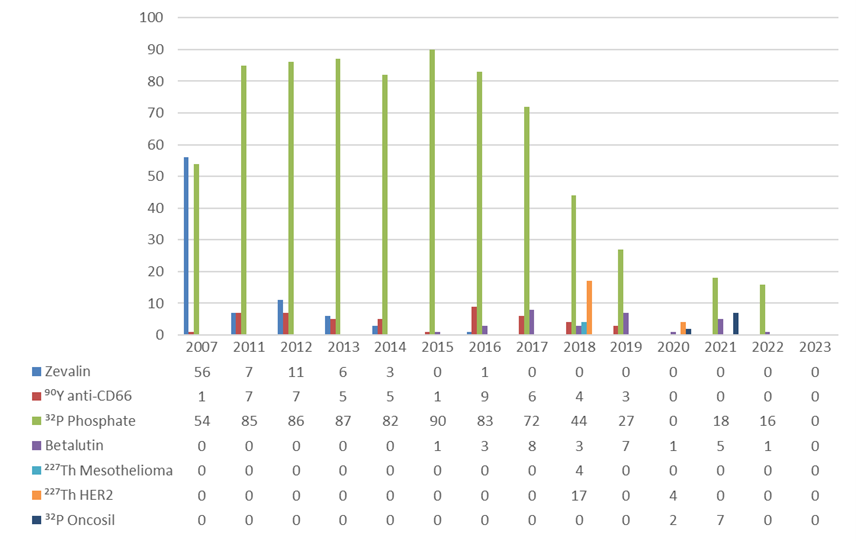
Figure 7: number of patients treated for haematological and other malignancies not included elsewhere.

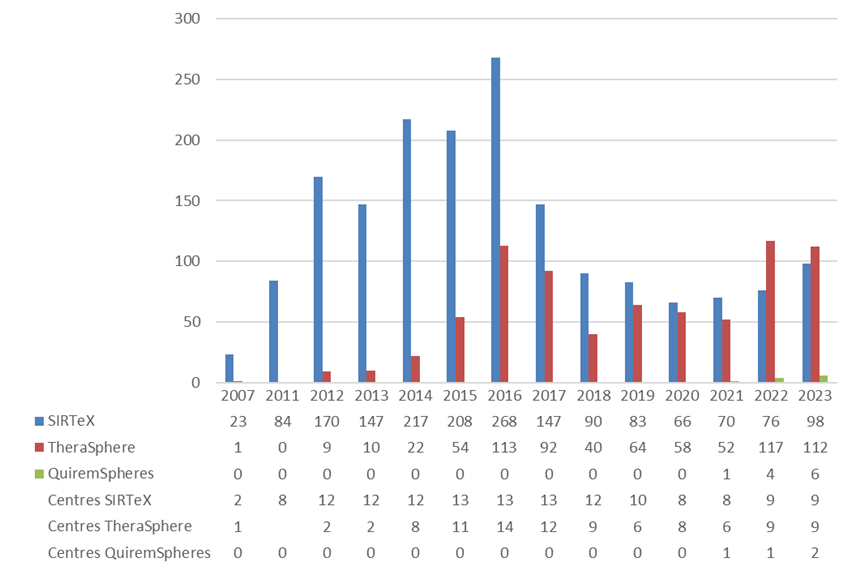
Figure 8: number of SIRT treatments given using SIRTeX, TheraSphere and QuiremSpheres

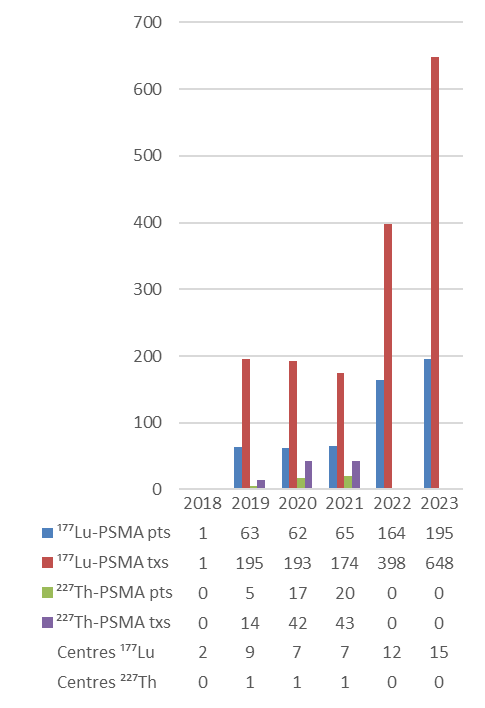
Figure 9: number of PSMA patients treated and treatments given using 177Lu PSMA and 227Th-BAY2315497 (PSMA). Data are available for 2018 onwards.

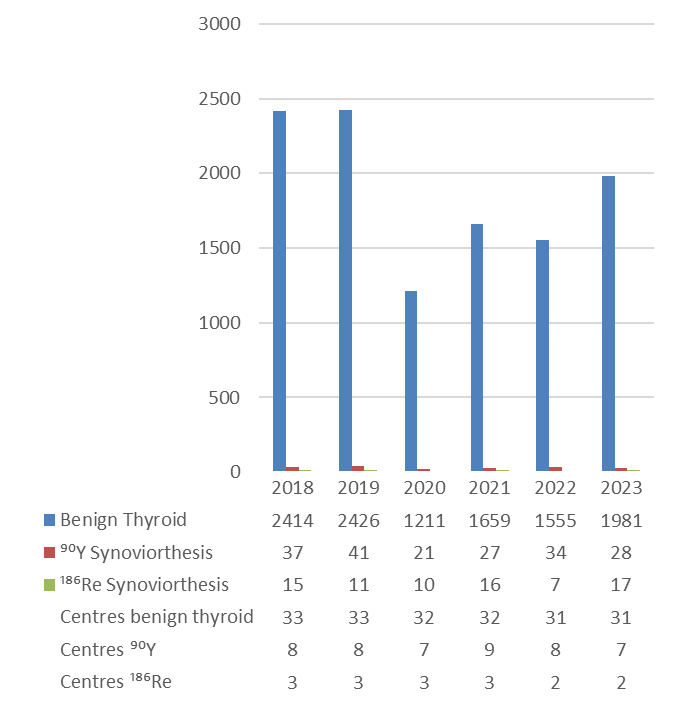
Figure 10: number of patients treated for benign thyroid conditions using Na131I and radiosynovectomies using 90Y and 188Re colloids. Data are available for 2018 onwards.

References


  1. Rojas B, Hooker C, McGowan DR and Guy MJ. Five years of molecular radiotherapy growth in the UK: survey results from 2007 to 2012 Nuc Med Commun 2015; 36 (8): 761-765
  2. Rojas B, Hooker C, McGowan DR, Guy MJ and Tipping J. Eight years of growth and change in UK molecular radiotherapy with implications for the future: Internal Dosimetry Users Group survey results from 2007 to 2015 Nuc Med Commun 2017; 38 (3): 201-204
  3. Rojas B, McGowan DR, Guy MJ, Tipping J, Aldridge M and Gear J. Eighty per cent more patients in 10 years of UK molecular radiotherapy: Internal Dosimetry Users Group survey results from 2007 to 2017 Nuc Med Commun 2019; 40: 657-661
  4. Rojas B, McGowan DR, Gear J, Smith AL, Scott C, Craig AJ, Scuffham J, Towey D, Aldridge M and Tipping J. Nearly double the patients and dramatic changes over 14 years of UK MRT: Internal Dosimetry Users Group survey results from 2007 to 2021 Nuc Med Commun 2023; 45(1):16–23
  5. The British Institute of Radiology Molecular Radiotherapy Working Party. BIR Report 23. Molecular Radiotherapy in the UK: Current Status and Recommendations for Further Investigation. London (UK): The British Institute of Radiology; 2011